Digital Microscope Zoom Explained: A UK Buyer's Guide
TL;DR: Digital microscope zoom is the total magnification achieved by combining physical optical lenses, digital sensor cropping, and the physical size of your display monitor. For precision UK bench work like PCB soldering, optical zoom is vastly superior to digital zoom because it enlarges the image without pixelation. Crucially, higher zoom levels reduce your working distance and depth of field, so a balanced optical magnification (typically 10x–50x) paired with a large HDMIDigita monitor is the optimal setup for maintaining necessary tool clearance.
What exactly is digital microscope zoom? Fundamentally, digital microscope zoom is the total magnification achieved by combining physical lens adjustments (optical zoom), software-based pixel enlargement (digital zoom), and the physical size of your viewing monitor. For precision engineers, electronics technicians, and serious hobbyists across the UK, the workbench is a domain where millimetres matter. Whether you are reflowing a microscopic 0402 SMD resistor on a printed circuit board (PCB) or inspecting the escapement mechanism of a vintage British timepiece, your ability to execute flawless work is entirely dependent on achieving the right zoom without sacrificing image clarity.
Based on our extensive testing at HDMIDigita, manufacturers frequently boast of astronomical magnification figures—often claiming 1000x or even 2000x zoom capabilities. However, without understanding the fundamental physics of optical versus digital zoom, working distance, and sensor resolution, UK buyers risk investing in equipment that hinders rather than helps their workflow. Consequently, this guide breaks down the mechanics of digital microscope zoom, helping you select the ideal system for strain-free, high-precision bench work.
Key Takeaways
- Optical vs. Digital Zoom: Optical zoom relies on physical lens adjustments to maintain image clarity, whilst digital zoom artificially enlarges pixels, often resulting in quality degradation.
- Working Distance is Crucial: High zoom levels naturally reduce your working distance and depth of field. Balancing magnification with enough space for soldering irons or tools is essential.
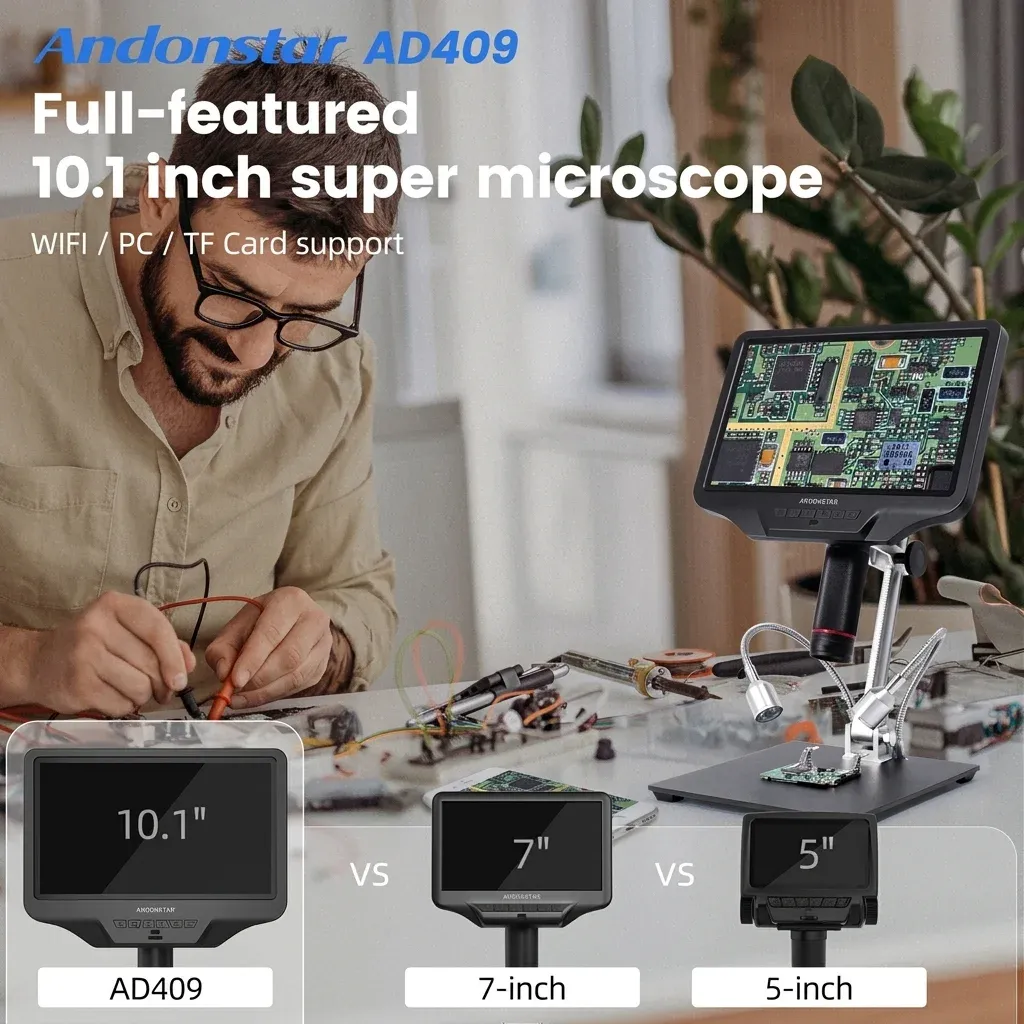
- Display Size Multiplies Magnification: A larger display inherently increases the final perceived magnification. A 10.1-inch screen provides significantly more strain-free zoom than a standard 7-inch display.
- UK Industry Standards: Professional electronics inspection in the UK often follows IPC-A-610 standards, requiring specific, distortion-free zoom ranges rather than arbitrary maximums.
What is the difference between optical and digital microscope zoom?
To make an informed purchasing decision under the Consumer Rights Act 2015—ensuring your equipment is genuinely fit for purpose—you must first understand how a digital microscope achieves its magnification. Unlike traditional binocular microscopes that rely entirely on glass eyepieces, digital systems use a combined approach. Specifically, they utilise a combination of optics, sensors, and display screens to magnify a subject.
What is optical zoom on a digital microscope?
Optical zoom is achieved through the physical movement of glass lenses within the microscope's objective barrel. By altering the focal length, the lens physically magnifies the light reflecting off your PCB or specimen before it ever hits the digital sensor. Because this process happens optically, there is zero loss of resolution. Therefore, if you require absolute clarity for identifying hairline fractures in solder joints or reading laser-etched part numbers on microchips, optical zoom is absolutely non-negotiable.
How does digital zoom work?
Digital zoom, conversely, occurs purely in software after the image has been captured by the CMOS sensor. The internal processor crops the centre of the image and enlarges it to fill the screen. To compensate for the missing data, the software uses interpolation algorithms to guess what the missing pixels should look like. Whilst modern algorithms are highly advanced, pushing digital zoom too far invariably leads to pixelation, visual noise, and a severe loss of the fine edge detail required for engineering inspection.
Furthermore, when reviewing specifications for digital microscopes, always look for the base optical zoom range. As a rule of thumb, digital zoom should be treated merely as a supplementary feature for quick, temporary close-ups rather than your primary working mode.
How does display size affect digital microscope zoom?
Interestingly, one of the least understood aspects of digital microscope zoom is the role of the display monitor itself. In the digital microscopy world, total magnification is not just a product of the lens; rather, it is calculated using the ratio between the camera sensor size and the physical dimensions of the display monitor.
Total Magnification Formula:
Optical Magnification × (Monitor Diagonal Size ÷ Sensor Diagonal Size)
Based on our HDMIDigita product evaluations, this formula highlights exactly why screen size is a critical component of zoom. For instance, if you view the exact same PCB component using the exact same optical lens, the component will appear significantly larger on a 10.1-inch monitor than it will on a 4-inch or 7-inch monitor. By opting for a larger, high-resolution display, you naturally achieve a higher practical zoom level without having to alter the optical lens or sacrifice your physical working distance.
For a deeper dive into how sensors and screens interact to produce a pristine image, consult our comprehensive guide to digital microscope cameras, which explores CMOS sensors and HDMI output in detail.
How much zoom do I need for a digital microscope?
In a traditional laboratory setting where specimens are pressed flat between glass slides, working distance is rarely an issue. However, for UK professionals conducting precision bench work, the optimal amount of zoom depends entirely on the physical workspace required. The relationship between digital microscope zoom, working distance, and depth of field is the defining factor of a successful setup.
How does zoom affect working distance?
Working distance is the physical space between the bottom of the microscope lens and the surface of your workpiece. In optics, there is an inescapable physical law: as optical zoom increases, working distance inevitably decreases. Consequently, if you require 100x optical magnification, the lens must sit mere millimetres away from the subject.
For PCB soldering, hot air rework, or watchmaking, this extreme proximity is highly impractical. You require enough clearance to safely manoeuvre soldering irons, tweezers, and hot air wands without melting the microscope's ring light or lens housing. Based on our industry testing, the ideal digital microscope zoom system offers a balanced focal length that provides 10x to 50x magnification whilst maintaining a generous working distance of 100mm to 150mm.
Why does zoom reduce depth of field?
Depth of field (DoF) refers to the vertical thickness of your subject that remains sharply in focus at any one time. Similar to working distance, as you increase your zoom factor, your depth of field shrinks dramatically. As a result, at extreme magnifications, only the very top of a microchip may be in focus, whilst the PCB surface directly beneath it dissolves into a blur.
During engineering inspection, a shallow depth of field causes severe eye strain as the operator must constantly adjust the focus dial. Therefore, high-quality lenses designed for bench work prioritise a wider depth of field at moderate zoom levels, ensuring both the component and the solder pads remain crisply in focus simultaneously.
What are the UK industry standards for microscope zoom?
When integrating a digital microscope into a commercial UK workshop or manufacturing facility, compliance and ergonomics are paramount. According to UK guidelines and international electronics manufacturing standards such as IPC-A-610, inspection equipment must provide clear, distortion-free magnification that allows technicians to accurately assess solder joint integrity without introducing digital artefacts.
Ultimately, chasing the highest possible digital microscope zoom specification is a common pitfall. Instead, British engineers and hobbyists should focus on high-quality optical lenses, appropriately sized HDMIDigita monitors, and ergonomic working distances to ensure their workstation is both compliant and comfortable for prolonged use.
Ready to upgrade your workbench with HDMIDigita?
Upgrade Your Bench — £465.90