Handheld Digital Microscope Explained: A UK Buyer's Guide
In short: A handheld digital microscope is a small, portable, low-cost scope you hold in your hand or clip to a phone. It is genuinely useful for quick checks and field use, but it struggles with soldering and fine repair because it ties up a hand and the image wobbles. If you keep fighting the tool, a stable bench microscope is usually the better upgrade.
What is a handheld digital microscope?
Handheld digital microscopes are pocket-sized units with a small built-in screen, or USB and phone-clip models that borrow your phone or laptop as the display. They are cheap, light and easy to carry, which is exactly why so many people start with one.
For simply looking at something — a coin, an insect, a fabric weave, a serial number — they do the job well. The problems start when you try to work under them.
What handheld models are good at
- Portability: they fit in a toolbox or pocket for on-site checks
- Quick spot inspections where you only need a closer look, not fine work
- Low cost, which makes them an easy first purchase
- Casual hobby use, from nature to collectibles
Where handheld microscopes struggle
The weekend that a console HDMI port or a retro board needs reworking is usually when a handheld shows its limits. You end up holding the scope in one hand, which leaves only one hand for the iron, solder and tweezers. A flimsy clamp makes it worse: the pad you just lined up drifts out of view the moment you touch the bench, and a phone-app connection can drop mid-task.
Small screens compound the problem. Enlarged on a phone, fine-pitch pins can still be hard to judge, so it is difficult to confirm whether a joint has really taken.
Getting the most out of a handheld microscope
If a handheld is what you have, a few habits make it far more usable. Rest your wrist or the scope body on a solid block so it is not floating in mid-air, brace the board against a bench cookie or small vice, and use the best light you can — a desk lamp raking across the surface often beats the scope's own ring LED. For phone-app models, connect over a cable rather than relying on a wireless link that can drop mid-solder.
These tricks buy you steadier inspection, but they do not free up your second hand. The moment you are regularly holding an iron and feeding solder while trying to keep a wobbling image in frame, you have outgrown the format.
Handheld versus bench for soldering and repair
For any task where both hands are busy, a bench microscope wins on the three things a handheld cannot offer at once: a steady, locked view, real working distance for tools, and a large screen you can watch while your hands stay on the board. If your main use is electronics, the microscope for electronics repair guide and the PCB inspection microscope guide go deeper on what to look for.
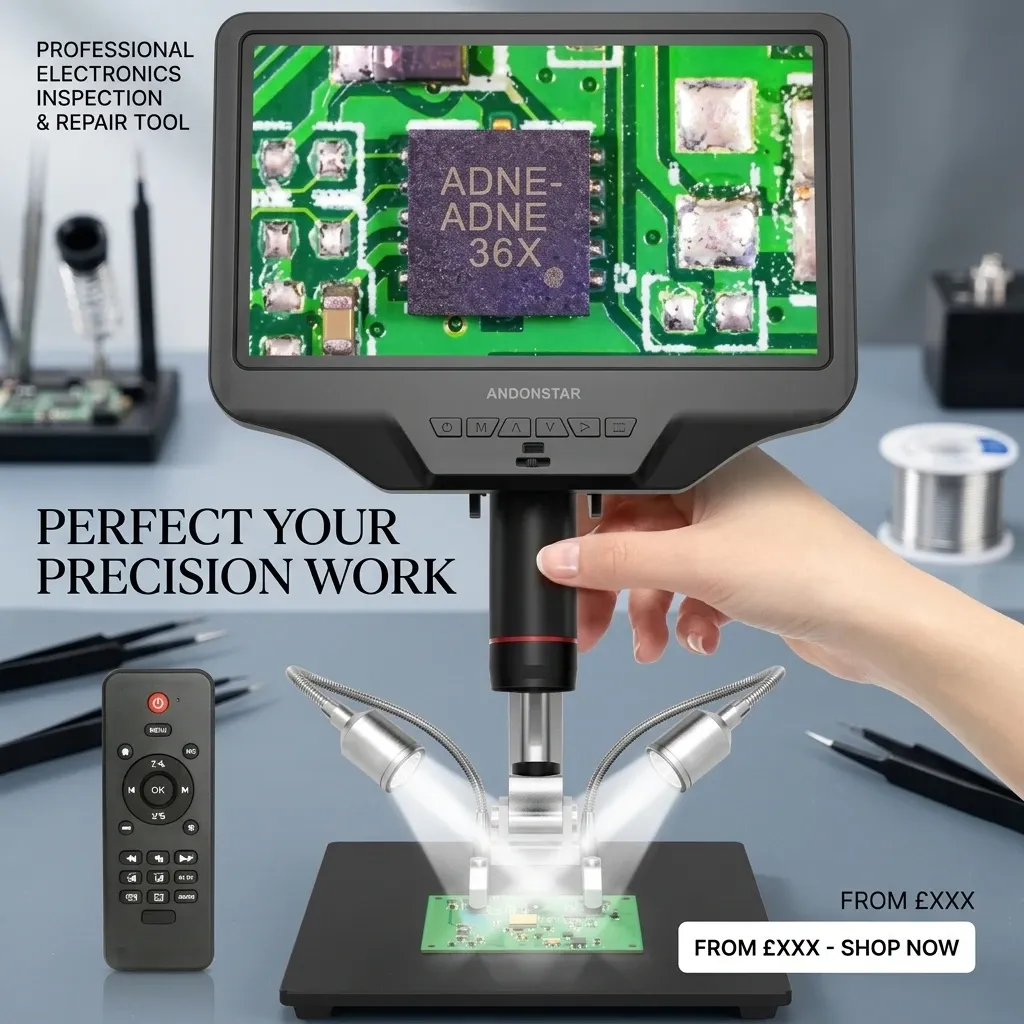
The HDMIDigita Pro 10.1-inch HDMI Digital Microscope is a bench answer to these limits, with a 10.1-inch IPS screen, 300X magnification, 24MP capture, a heavy metal boom stand and dimmable dual gooseneck lights, at £465.90 inc. VAT with free UK next-day delivery, a 12-month UK warranty and 30-day returns.
When to upgrade to a bench microscope
If a handheld lives permanently on your desk and you keep wishing for a second hand, that is the signal to step up. A heavy metal stand and a 10.1-inch screen turn microsoldering from a balancing act into steady, repeatable work — and a single lifted pad avoided often costs more than the difference in price.
Frequently Asked Questions
What is a handheld digital microscope good for?
It is best for portability and quick checks: looking at coins, components, serial numbers, fabrics or nature in the field. For fine work where both hands are needed, it is less suitable than a bench model.
Can you solder using a handheld digital microscope?
You can for occasional touch-ups, but it is awkward because holding the scope leaves only one hand for the iron and tweezers, and the image tends to wobble. For regular soldering a fixed bench microscope is far easier and safer.
Why does my handheld microscope image keep shaking?
Handheld and clip-mounted scopes transmit every small movement of your hand or the bench, and lightweight arms flex easily. A heavy, fixed stand removes that shake and keeps the subject in focus while you work.
Is a handheld or bench digital microscope better for electronics?
For electronics repair a bench microscope is generally better because it keeps both hands free, holds a steady view and offers more working distance. Handhelds remain handy as a portable second option for quick inspections.
Ready to upgrade your workbench with HDMIDigita?
Upgrade Your Bench — £465.90